

The long winter months are drawing to a close and spring is making way. It's time to soak up the sun and get out into the fresh air. Close to nature and offering a thousand and one activities, Geneva has no shortage of assets to attract visitors.
Discover Geneva in Spring
Six kilometres between lake and mountain
On foot, on rollerblades, on a scooter or on a bike, you decide how you want to discover Geneva.
Let me introduce you to the pedestrian quays, designed all around the harbour, over 6 km without interruption. Running alongside the buildings and monuments that embellish the "little lake", as the end of Lake Geneva is called, they offer an exceptional walk with a permanent view of the lake, the Jet d'eau, the city and the mountains.
A presidential palace
Quai Wilson takes its name from the Palais Wilson, a former hotel in Geneva. It was bought by the League of Nations ( League) in September 1920 and housed its headquarters until 1936, when it moved to the new Palais des Nations.
It was during this period, in 1924, that the hotel was named Wilson Palace in honour of the founder of the League of Nations, American President Woodrow Wilson.
Since 1998, the Wilson Palace has been home to the Office of the United Nations High Commissioner for Human Rights (OHCHR).
The Bristol Hotel, the focal point of the harbour
As you leave the hotel, turn left to reach the quays in just one minute's walk. On your left is the right bank of Geneva (in relation to the lake), crossed first by the Quai du Mont-Blanc, then by the Quai Wilson.
In front of you, the Mont Blanc bridge majestically spans the Rhône. On your right is the Île Rousseau; dedicated to Jean-Jacques Rousseau, the island with its statue of the philosopher, its trees, its birds and its pavilion is a place unique in Geneva offering coolness even in the hottest of summers and an original view on the city.
You now arrive on the left bank, and join the Quai du Général Guisan, followed by the Quai Gustave-Ador, which gives access to the jetty leading to Geneva's famous Jet d'Eau.
English Garden
Just after the Mont Blanc bridge, the English Garden begins, which was completely reclaimed from the lake after the destruction of the fortifications in the 1850s.
Situated on the lakefront, facing the Jet d'eau, the Jardin anglais is located at unique , making it one of the most spectacular green spaces in Geneva.
The National Monument marks the entrance to the garden. This statue is composed of two women embracing. One is the Republic of Geneva (the one with the crenellated headdress), the other Helvetia, Switzerland. They symbolise the attachment of Geneva to the Confederation on 12 September 1814.
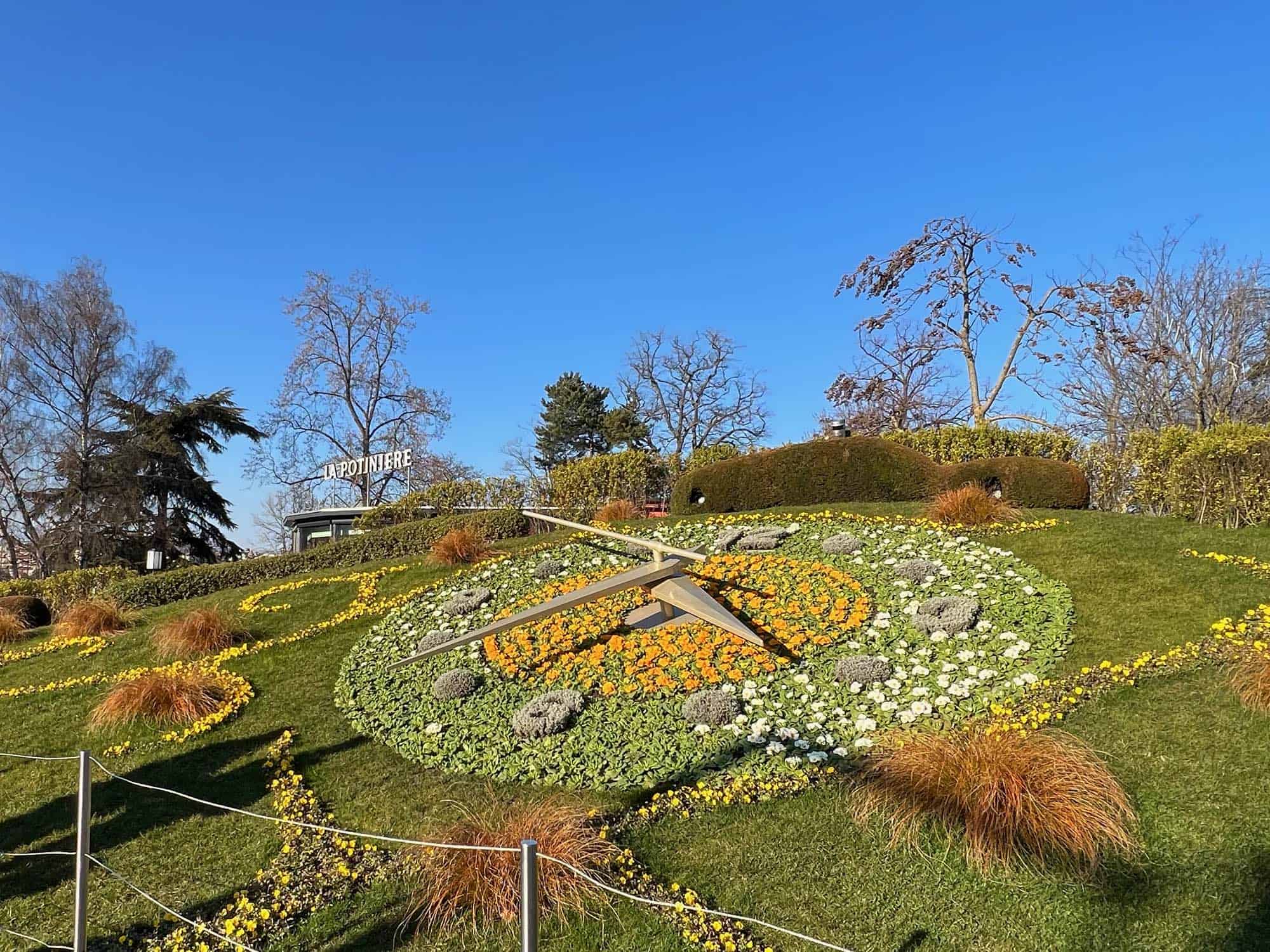
Then continue to the right of the restaurant to reach the Flower Clock, the most photographed monument in Geneva.
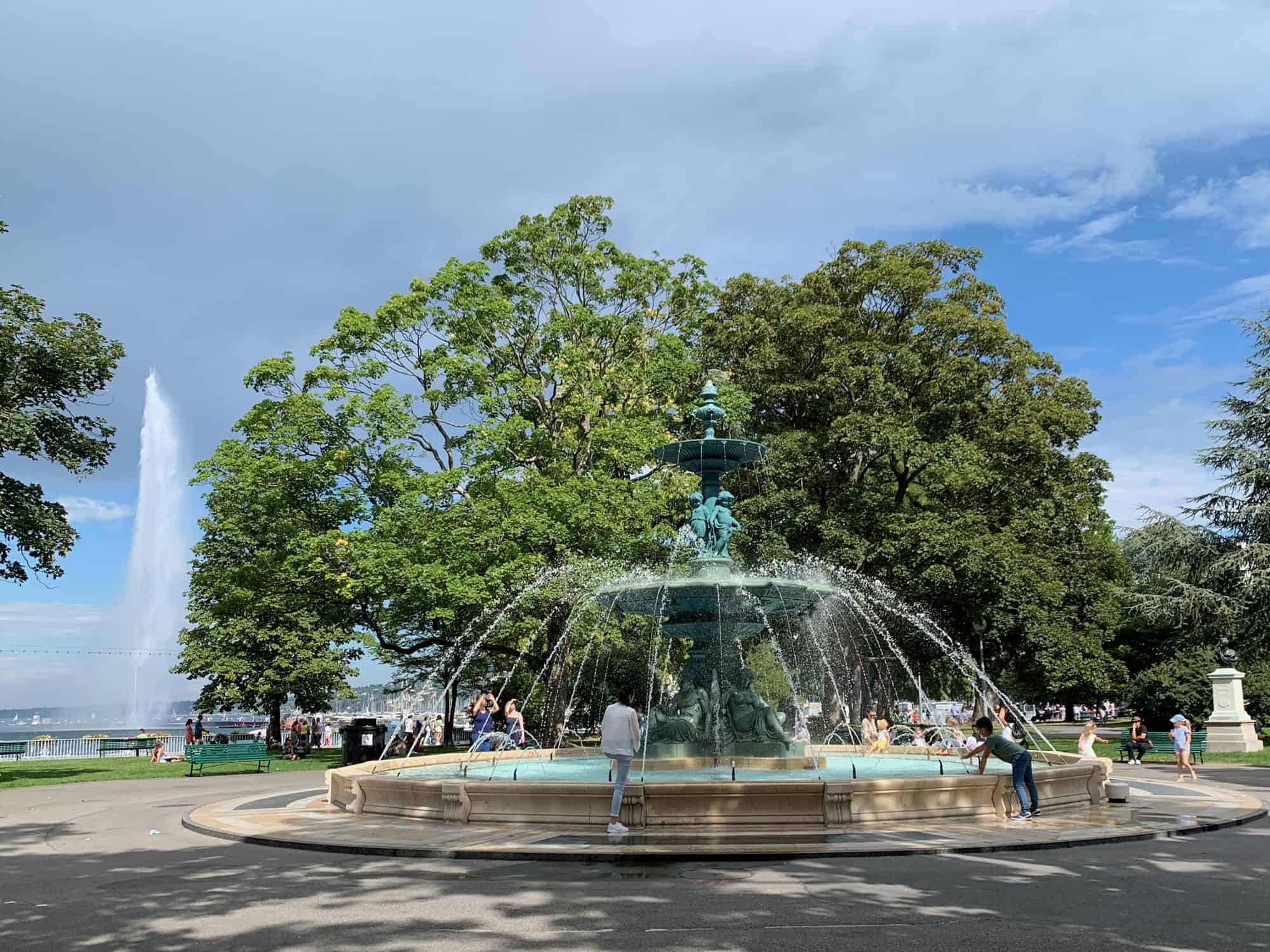
At the heart of the park is the Four Seasons Fountain, which runs parallel to the lake with the restaurant and bandstand.
The flower clock
As emblematic as the Jet d'Eau, Geneva's most famous clock is photographed daily by hundreds of tourists from all over the world.
The Flower Clock was created in 1955 by the Parks and Promenades Department. Several generations of gardeners have succeeded one another since its creation to plant and maintain the thousands of flowers and plants that make up the clock.
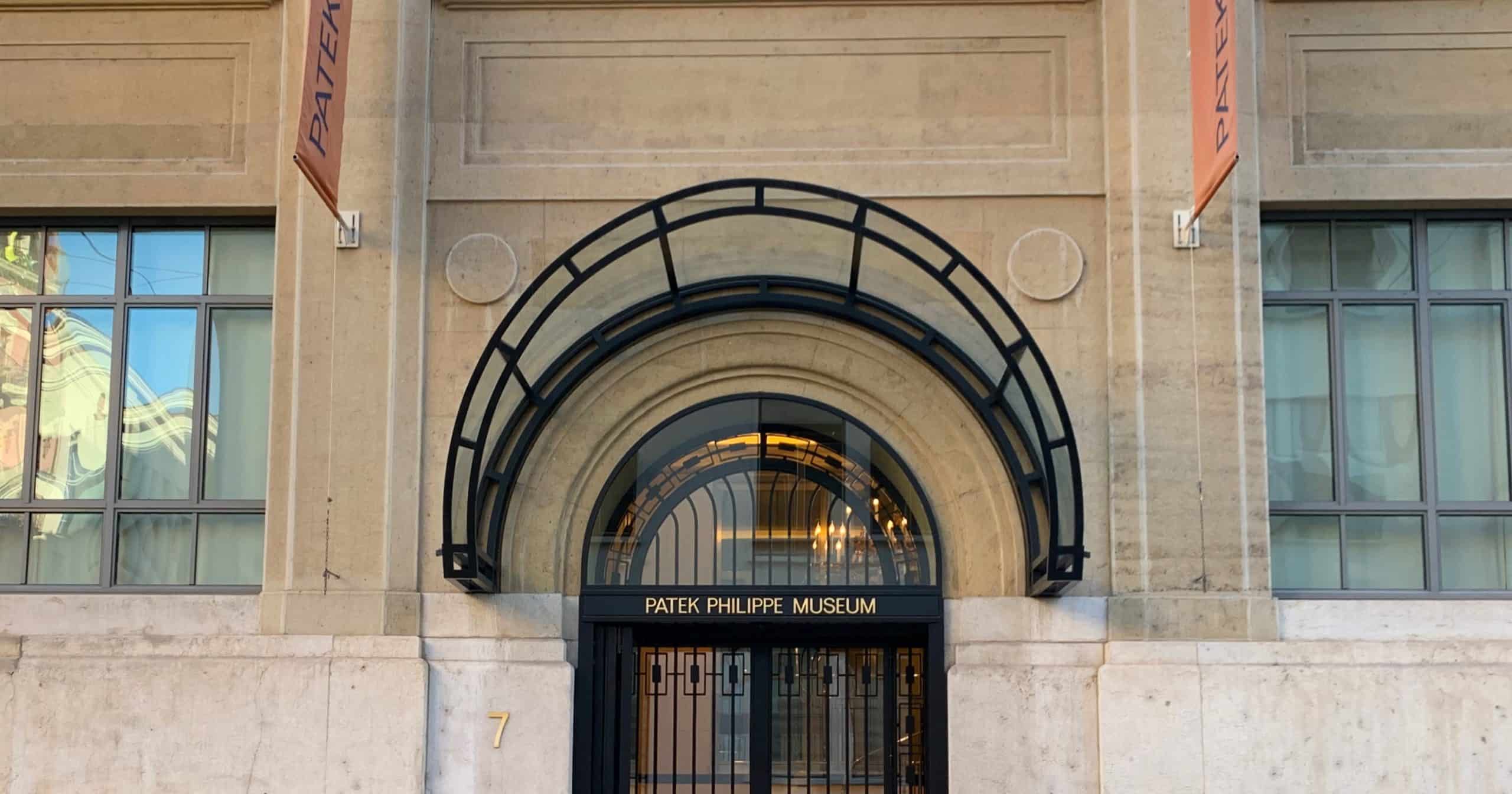
The flowered clock has become a reference in the world and has been adapted several times. The hands - made and donated to the City by the famous Patek Philippe manufacture - offer an elegant design, close to the original one. The second hand, measuring 2.5 metres in length, is without doubt the largest in the world!
Why has Swiss watchmaking developed from Geneva?
John Calvin was originally a French pastor who left the Catholic Church to defend the ideas of the Protestant reformation. He was forced to take refuge in Switzerland. In 1541, he went to Geneva to help reform the existing laws. Among these reforms was a ban on the wearing of ostentatious ornaments such as jewellery. The many talented jewellers in Geneva were forced to switch to watchmaking.
From 1700 onwards, the economy was dominated by the triumph of watchmaking and related trades and by general economic prosperity. The manufacture of watches was organised in small artisanal workshops headed by a master, grouped under the generic name of "Fabrique".
In 1760, there were 600 master watchmakers in Geneva, while the city had 20,000 inhabitants.
The "Poinçon de Genève" certification label, instituted in 1886, is the emblem of Geneva's excellence in fine watchmaking.
The world's most important brands in the luxury sector are present in Geneva, including Rolex, Patek Philippe, Chopard and the Richemont group (Cartier, Vacheron Constantin, Piaget, Montblanc, etc.).